
New Zealand’s AI boom is not coming — it is already here, reshaping banks, orchards, hospitals and start-ups across the country. And while the headlines tend to feature the same handful of overseas names, a quieter story is unfolding closer to home: the women building, questioning and leading this technology in Aotearoa. Here is a look at where they work, what they are actually making, and why having them in the room is the difference between AI that works and AI that quietly fails the people it was meant to serve.
An Industry Finding Its Feet
From Research Labs to Boardroom Agendas
For years, artificial intelligence in New Zealand lived quietly in university research groups and a handful of specialist teams. That has changed fast. AI is now on the agenda of every bank, insurer, government department and scale-up in the country, and the people who understand how these systems actually work have gone from niche hires to some of the most sought-after talent in the sector. The boom is real, and it is reshaping what a tech career in Aotearoa can look like. What is striking, if you know where to look, is how many of the people doing the genuinely interesting work are women — not as a diversity line item, but as the researchers, engineers and leaders setting the direction.
A Small Country With Outsized Questions
New Zealand is never going to train the largest models or outspend the big overseas labs, and that turns out to be a strength rather than a weakness. The questions that matter here are practical and specific: how do you apply machine learning to a primary-sector economy, a bicultural society and a population of five million without importing assumptions that do not fit? The AI Forum New Zealand has spent years mapping how the local sector is growing, and the picture is one of applied, problem-led work rather than hype. That applied focus suits people who care about outcomes over buzzwords — and it has opened doors for women who want to build things that are useful, not just impressive.
Where the Women Actually Work
The Researchers and Model-Builders
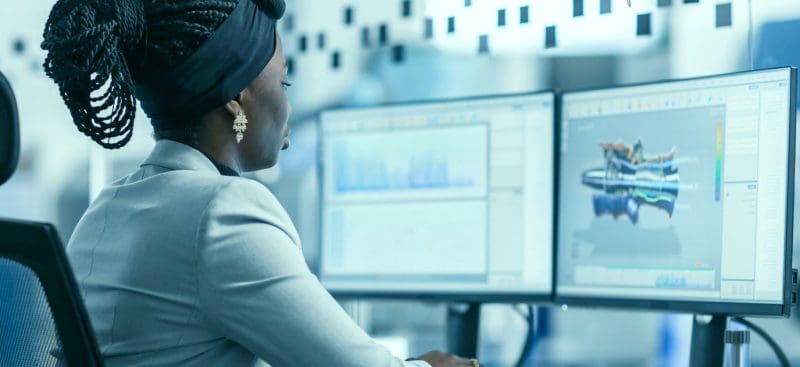
At the deep end sit the researchers and machine-learning engineers — the people training models, fine-tuning them and working out why they behave the way they do. In NZ you will find women in these roles across the universities, the Crown research institutes and the product teams of companies you have actually heard of. The work ranges from computer vision for agritech to natural language processing for customer support, and it demands a comfort with maths, code and ambiguity in roughly equal measure. It is demanding, well paid and genuinely creative, and the idea that it is somehow a male domain says far more about hiring history than about who is good at it.
Data, MLOps and the Unglamorous Plumbing
For every headline-grabbing model there is a small army of people making sure the data is clean, the pipelines run and the thing keeps working in production. Data engineering and MLOps are where a huge amount of the real value — and a huge number of the jobs — actually live. These roles are a brilliant entry point, especially for career-switchers, because they reward rigour and problem-solving over a particular degree. Plenty of women have moved into AI through exactly this door: start with the data, learn the tooling, and grow into the modelling work from a position of knowing how the whole system fits together.
The Ethicists, Product Leads and Translators
AI does not ship itself. Someone has to decide what to build, whether it should be built at all, and how to explain it to the humans who will use it. Product managers, AI ethicists and the translators who sit between technical teams and the rest of the business are central to whether any of this works, and women are heavily represented in these roles. This is not a consolation prize for people who cannot code — it is some of the highest-leverage work in the field, because a clever model pointed at the wrong problem is just an expensive mistake with good benchmarks.
The Work Behind the Headlines

Solving NZ-Shaped Problems
The most interesting local AI work tends to be unglamorous and deeply specific. Detecting disease in kiwifruit orchards, optimising electricity demand, flagging fraud for a local bank, triaging the load on an emergency service — these are the problems NZ teams are actually solving. None of them make international news, and all of them matter to someone’s livelihood or safety. Women leading this work tend to talk less about the technology and more about the outcome, which is exactly the mindset the sector needs more of. The model is never the point; the problem it solves is.
Te Reo, Taonga and Data Sovereignty
One area where New Zealand is genuinely ahead of the world is the conversation about who owns data and how indigenous knowledge is treated by AI systems. Maori data sovereignty is not an abstract debate here — it shapes how language tools handle te reo Maori, how datasets about people and place are governed, and who gets a say. Women, and wahine Maori in particular, are doing leading work at this intersection of technology and tikanga. It is a reminder that building AI well is not only a technical challenge but a cultural one, and that the teams who get it right will be the ones that look like the country they serve.
Why Who Builds AI Actually Matters
Bias Is a Design Decision
It is tempting to imagine that an algorithm is neutral because it is made of maths. It is not. A model learns from the data it is given, and that data carries the patterns — and the prejudices — of the world that produced it. Hiring tools that quietly downgrade women’s CVs, image systems that fail on darker skin, voice models that cannot follow a regional accent: these are not freak accidents, they are the predictable result of narrow teams and narrow data. Algorithmic bias is a design problem, which means it is also a solvable one — but only if the people designing the system are positioned to spot it.
Representation as Quality Control
This is the practical case for diversity that has nothing to do with optics. A team that includes the people an AI system will affect is simply more likely to catch the ways it can go wrong before it ships. Women in the room are not there to represent women; they are there because a wider range of lived experience makes for better-tested, more robust systems. Treat representation as a form of quality control and the whole conversation changes — it stops being a favour and starts being engineering common sense. The companies that work this out early will build better products, full stop.
Getting In, and Staying In

There Is No Single Front Door
If you are looking at the AI boom from the outside and wondering how to get in, the good news is that there is no single prescribed path. Some people arrive with a research degree; plenty more come through data analysis, software engineering, a bootcamp, or a hard pivot from an entirely different field. What the work rewards is curiosity, persistence and the willingness to keep learning as the ground shifts under you — which it will, constantly. Pick a real problem you care about, learn the tools you need to take a run at it, and build something small. A portfolio of things you have actually made beats a wishlist of certifications every time.
Community Is the Multiplier
Nobody breaks into a fast-moving field alone, and this is where community does its quiet, essential work. The peer who tells you which course is worth the money, the mentor who reviews your first model, the Slack channel where someone answers the question you were too embarrassed to ask — these connections are how careers actually compound. New Zealand’s tech community is small enough that the right introduction is rarely more than a couple of conversations away, and groups built around women in tech exist precisely to make those introductions happen. Show up, ask questions, and pass the favour on when it is your turn.
The Next Five Years
AI in New Zealand is still early enough that the people entering now will help decide what it becomes. That is a rare window. The roles are real, the pay is strong, and the problems are the kind that actually matter to the country. The women already doing this work have shown it is neither a boys’ club nor a spectator sport — it is a field being actively built, and there is room in it for anyone prepared to do the work. The only wrong move is to assume the door is closed. It is not; it is wide open, and the sector needs more people walking through it.
The women shaping New Zealand’s AI are not waiting for permission, and they are not a footnote to someone else’s revolution. They are researchers, engineers, ethicists and founders building tools for a country worth getting right. The sector is still young enough that who shows up now will shape what it becomes — which is the best possible reason to show up. The door is open and the work is real; the only question is who walks through it next.