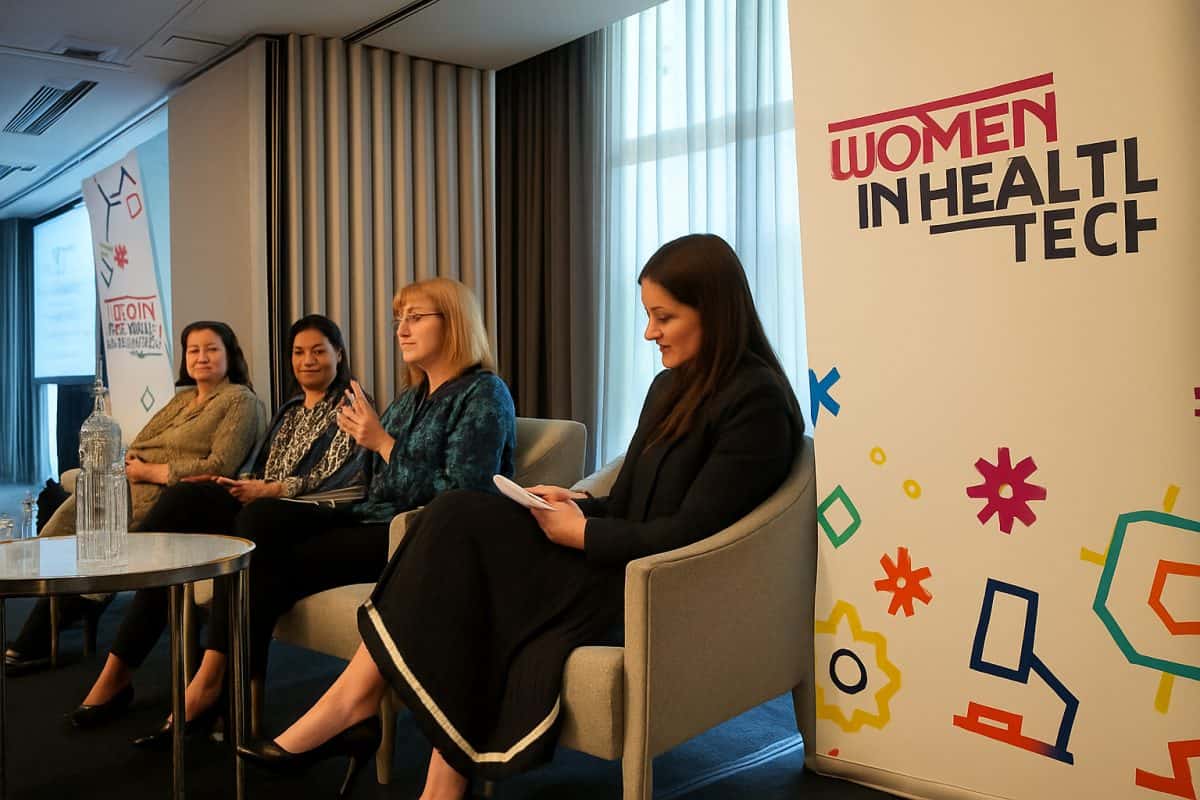
NZ healthtech is not waiting for permission. While the broader tech sector wrestles with its diversity deficit, healthcare technology has quietly become the space where women founders, clinicians, and developers are building products that actually work — because they understand the problems firsthand.
The Quiet Revolution in NZ Healthcare
Why Healthcare Took So Long to Digitise
For years, NZ healthcare ran on paper referrals, fax machines, and systems that looked like they were designed during the Muldoon era. While fintech and agritech sprinted ahead, health remained stubbornly analogue. Part of it was regulation — rightly so, given patient safety stakes. Part of it was funding. The public health system operated on budgets that made startup founders weep, and private investment in health IT was minimal before 2018.
But that gap created a peculiar opportunity. When COVID-19 forced telehealth from nice-to-have to non-negotiable overnight, NZ had a generation of tech-literate clinicians and developers ready to build. The pandemic did not create healthtech talent in this country — it gave existing talent permission to move fast. And a disproportionate number of the people who stepped into that space were women, many of them carrying dual expertise across clinical practice and software development.
The result is a healthtech sector that skipped some of the legacy baggage plaguing larger markets. Rather than retrofitting clunky systems, NZ founders built from scratch — and they built differently.
Women at the Intersection of Care and Code
Here is a stat that explains a lot: roughly 75% of the NZ health workforce is female. Nurses, midwives, GPs, physiotherapists, public health specialists — women dominate the sector that healthtech exists to serve. So when clinicians started crossing into tech, the pipeline was already skewed.
Dr. Michelle Dickinson (Nanogirl) has been vocal about this crossover for years: people who understand the problem deeply are best positioned to build the solution. In healthtech, that means the clinical experience women carry is not just relevant — it is the competitive advantage. A developer who has never triaged a patient builds a different product from someone who has done 200 triage assessments in a single shift.
This is not about diversity for diversity is sake. It is about epistemic range — the breadth of knowledge and lived experience that shapes what gets built. When your founding team includes people who have been patients, caregivers, and clinicians, you catch failure modes that a homogeneous team misses entirely. The Ministry of Health workforce data confirms the gender skew, and healthtech is where that skew becomes an asset.
The Numbers Behind the Noise
NZ healthtech is not a feel-good niche. Callaghan Innovation reported health and biotech as one of the fastest-growing R&D investment categories through 2023-2025. The sector pulled in over $200 million in combined public and private funding during that period, with telehealth alone growing 400% in adoption since 2020.
What makes NZ unusual globally is the proportion of women in founding and leadership roles across healthtech ventures. While women lead roughly 5-8% of tech startups globally, estimates from NZ Tech and the Digital Health Association suggest the figure sits closer to 20-25% in NZ healthtech. That is not parity — but it is a different universe from the broader tech landscape.
The pipeline matters too. Auckland and Otago universities are producing cohorts where women outnumber men in health sciences, and computer science enrolments among women have ticked upward for six consecutive years. When those two streams converge — clinical training and technical skill — the founders who emerge look nothing like the Silicon Valley archetype.
Building What the System Could Not
Telehealth Beyond the Video Call
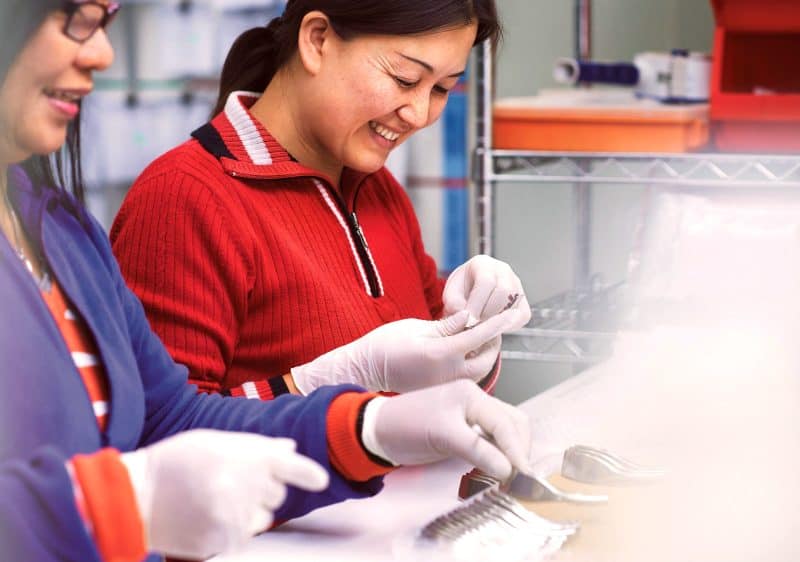
Telehealth got reduced to “GP on a screen” during the pandemic rush, but the interesting work happened after the novelty wore off. Companies like Tend Health pushed into asynchronous care models — patients uploading symptoms, photos, and history that clinicians review on their own schedule, cutting wait times without demanding simultaneous availability from both parties.
Dr. Akilah Willery and others in the telehealth space have argued that synchronous video consults replicate the worst parts of in-person visits (rigid scheduling, brief windows) while losing the best parts (physical examination, rapport). The next generation of NZ telehealth platforms treat the consultation as a data exchange, not a meeting. That means better triage, better documentation, and — critically — better access for rural and underserved communities who cannot take two hours off work for a 15-minute appointment.
The Telehealth Forum NZ tracks adoption across DHBs, and the pattern is clear: platforms designed with patient workflows in mind outperform those designed around clinician convenience. Unsurprisingly, the teams making that distinction tend to include people who have been on both sides of the consultation.
Diagnostic Tools That Actually Reach Patients
A diagnostic tool that sits in a hospital lab is a diagnostic tool for people who can get to a hospital. The most compelling NZ healthtech work targets the access gap — putting screening and monitoring into the hands of patients and community health workers.
Toku Eyes, co-founded with input from researchers at the University of Auckland, uses retinal imaging and AI to screen for diabetic retinopathy. The system works with a standard fundus camera and an internet connection, meaning screening can happen in rural clinics and marae rather than requiring a specialist appointment in a city. Given that Maori and Pasifika communities face disproportionately high diabetes rates, this is not incremental improvement — it is a structural access correction.
Similarly, oDocs Eye Care developed smartphone-based ophthalmology tools that collapse the cost barrier for eye screening in remote areas. The founding team drew on clinical experience in underserved settings to design hardware that field workers could actually use, not just hardware that impressed investors. These companies share a design philosophy: clinical utility at the point of need, not clinical utility at the point of funding.
Femtech Finds Its Footing
Femtech — technology addressing female-specific health needs — was a $1 billion global market before most NZ VCs had heard the term. Menstrual tracking, fertility monitoring, pelvic floor rehabilitation, menopause management: these are massive health areas that received minimal tech investment for decades because the people writing cheques did not experience the problems.
In NZ, companies like Juniper (hormonal health) and emerging startups tackling perimenopause symptom management are filling gaps that the public health system treats as afterthoughts. One Wellington-based founder described her pitch experience bluntly: “I had to explain to a room of men what hot flushes were before I could explain my product.”
The pipeline problem in femtech is not talent — it is capital. NZ angel networks have historically skewed male, and femtech pitches require investors to engage with health experiences they may not share. Organisations like the Angel Association New Zealand are actively working to diversify their membership, but the funding gap persists. What is encouraging is that femtech founders in NZ tend to bootstrap further before seeking investment, producing leaner companies with stronger product-market fit by the time they do raise.
Diverse Teams, Different Outcomes
The Evidence for Inclusive Design in Health
The case for diverse teams in healthtech is not theoretical — it is documented in product failures. Pulse oximeters that gave inaccurate readings on darker skin tones. AI dermatology tools trained predominantly on light-skinned datasets. Cardiac risk calculators calibrated to male symptom presentations. These are not edge cases; they are systematic blind spots produced by teams that looked the same and thought the same.
Research from the University of Otago and international meta-analyses consistently shows that team diversity correlates with broader problem identification in health product development. A 2023 study in the Lancet Digital Health found that health AI tools developed by gender-diverse teams were 34% less likely to exhibit demographic bias in their outputs.
In NZ specifically, the Health Research Council has pushed for equity-focused research design, requiring grant applicants to demonstrate how their work addresses disparities across ethnicity, gender, and socioeconomic status. That policy pressure filters into the healthtech startup ecosystem — teams that can demonstrate inclusive design methodology have a material advantage in accessing public funding.
When the User Is Also the Builder
There is a concept in design thinking called “nothing about us without us” — the principle that people affected by a product should be involved in building it. Healthtech is where this principle carries life-or-death stakes.
Consider maternity care technology. NZ has one of the highest rates of midwife-led care globally, and the digital tools supporting that care need to work within a model that centres continuity and patient autonomy. A maternity app designed by someone whose mental model is the US hospital system — episodic, physician-driven, liability-focused — will actively misserve NZ midwives and their clients.
Hira, the planned national health information platform, has drawn on clinician input throughout its design process. But the most innovative work often happens at the margins — small teams where the founder is simultaneously the domain expert, the user, and the developer. Clanbeat and similar NZ wellness platforms emerged from exactly this overlap: founders who experienced gaps in their own care and had the technical skills to close them. The products they build reflect a granularity of understanding that no amount of user research replicates.
Funding, Barriers, and the Long Game
The Capital Problem Women Founders Know Too Well
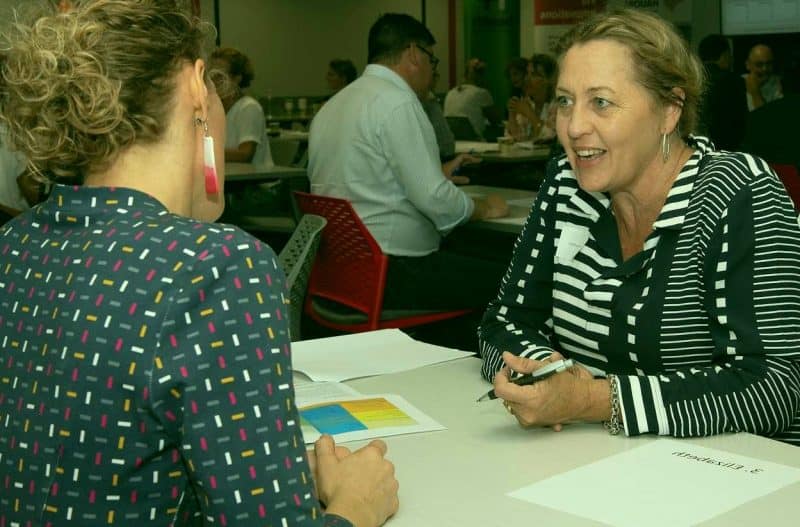
Women-founded healthtech companies in NZ face the same capital squeeze as women founders everywhere, compounded by a small domestic market. NZVCA data shows women-led startups received less than 10% of total venture funding through 2024, and healthtech — with its longer development cycles and regulatory hurdles — requires patient capital that the NZ VC ecosystem has historically struggled to provide.
The structural issue is not that investors are overtly biased (though some are). It is that pattern matching drives investment decisions. VCs fund what looks like previous successes, and previous successes disproportionately featured male founders in consumer tech or SaaS. A woman pitching a pelvic floor rehabilitation device to investors who have never thought about pelvic floor health faces a comprehension gap before she faces a credibility gap.
Organisations like KiwiNet and the Icehouse have introduced programmes specifically targeting women founders, including healthtech-specific tracks. The KiwiNet Awards increasingly recognise health innovation led by women researchers. But programme support and capital access are different things, and the gap between them remains wide.
Regulatory Navigation as Competitive Moat
Health technology regulation in NZ — governed by Medsafe for devices and the Privacy Act 2020 for health data — is frequently cited as a barrier to entry. And it is. Compliance costs money, takes time, and requires expertise that first-time founders rarely possess.
But regulation also functions as a competitive moat. Once a product is compliant, the regulatory burden that slowed you down now slows your competitors. NZ founders who navigate Medsafe classification early gain a head start that is expensive to replicate. And because NZ regulatory frameworks align closely with Australian TGA standards, compliance here opens a pathway to a market ten times larger.
Several women-led NZ healthtech companies have turned regulatory expertise into a strategic asset. Rather than treating compliance as a cost centre, they embed regulatory awareness into product development from sprint one. The result is products that reach market with fewer post-launch compliance surprises — and founding teams that international partners trust precisely because they have done the hard yards with regulators early.
What Happens Next
The next five years will determine whether NZ healthtech becomes a genuine export strength or remains a collection of promising but under-capitalised startups. The talent is here. The clinical expertise is here. The regulatory environment, while demanding, is navigable. What is missing is the connective tissue: investor education in health domains, structured pathways from clinical research to commercial product, and retention strategies that stop NZ healthtech talent from being poached by Australian and US companies offering three times the salary.
Te Whatu Ora (Health NZ) restructuring the health system into a single national entity creates both risk and opportunity. A unified procurement system could be a launchpad for NZ-built healthtech — or it could default to established international vendors. Women founders in the sector are watching this closely, and several are actively engaging with the procurement design process.
The optimistic read is that NZ is accidentally well-positioned. A small, diverse, digitally literate population with universal healthcare and a culture of pragmatic innovation is exactly the test market that healthtech products need before scaling internationally. The women building in this space know that. The question is whether the ecosystem supports them long enough to prove it.
Healthcare built by people who have only ever experienced it from the provider side produces tools for providers. Healthcare built by people who have sat in the waiting room, navigated the system as patients and caregivers, and then picked up a keyboard — that produces something fundamentally different. NZ healthtech is proving the point, one product at a time.