
Somewhere in NZ right now, a woman is building a company and nobody outside her immediate circle knows about it. She is not on a conference stage. She has not been profiled in a startup listicle. She is solving a real problem, acquiring real customers, and navigating a funding landscape that was not built with her in mind. This is what most women-led startups in NZ actually look like — not unicorn narratives but sustained, determined building.
The State of Play
The Numbers Behind the Headlines
New Zealand likes to tell itself a story about equality. We gave women the vote first. We have had three female prime ministers. The narrative is progressive and the data is less so. Women-founded startups in NZ receive a fraction of total venture capital — globally, female founders get roughly two percent of VC funding, and NZ tracks close to that dismal average.
The New Zealand Growth Capital Partners (formerly NZVIF) has made efforts to address this, but structural change is slow. According to data from the NZ startup ecosystem, women lead or co-lead around fifteen to twenty percent of funded startups. That number has been creeping upward, but not at a pace anyone should celebrate yet.
What the numbers miss is the volume of women building businesses that never enter the VC pipeline at all — bootstrapped operations, consultancies that become product companies, side projects that grow into real revenue. The startup ecosystem’s obsession with venture-funded scale-ups means a lot of women-led businesses are invisible to the metrics that get reported. They exist. They employ people. They just do not fit the pattern that gets counted.
Beyond the Unicorn Narrative
The dominant startup narrative — raise millions, scale fast, exit big — was written in Silicon Valley by a very specific demographic. It assumes access to networks, capital, and a safety net that most NZ founders do not have, and that women founders have even less of. When the template does not fit, the conclusion is usually that the founder failed rather than that the template was wrong.
Most successful women-led businesses in NZ look nothing like a unicorn and that is not a limitation. They look like a founder who identified a problem, built something that solves it, found customers who pay for it, and grew at a rate that the business can sustain. Profitable, sustainable, and useful — these are not consolation prizes. They are what most businesses should aspire to.
The unicorn narrative also distorts what “success” means. If the only stories that get told are the ones with eight-figure exits, then a woman running a profitable SaaS company with twenty employees and strong revenue growth feels like she has underachieved. She has not. She has built something real in a market of five million people, and that takes a particular kind of skill that does not get enough respect.
The Funding Landscape
NZGCP, Angels, and the VC Gender Gap
The NZ startup funding ecosystem has layers, and women’s experience differs at each one. New Zealand Growth Capital Partners invests through fund-of-funds and co-investment, and has publicly committed to improving diversity in its portfolio. The Angel Association New Zealand coordinates angel investor networks across the country — Ice Angels in Auckland, Angel HQ in Wellington, Canterbury Angel Investors in Christchurch — and these groups are where many early-stage founders get their first external capital.
The gender dynamics in angel investment are blunt. Most angel investors are men. Most have pattern-matched on what a successful founder looks like based on who they have funded before, which is mostly men. This is not always conscious bias, but conscious or not, the result is the same: women pitch to rooms that default to scepticism in ways their male counterparts do not experience.
At the venture capital level, NZ has a small but growing pool of firms — Movac, Blackbird (Australian but active in NZ), Global From Day One, and others. Some have made explicit commitments to funding diverse founders. Whether those commitments translate to cheques is the question that matters, and the data is still catching up to the rhetoric.
Grants and Government Support
If venture capital feels like a closed shop, government grants offer a different path. Callaghan Innovation provides R&D grants that can fund product development, and their process — while bureaucratic — evaluates the technology and market opportunity rather than the founder’s network. The Regional Business Partner Network connects startups with mentors and co-funding for business development.
MBIE’s innovation funding programmes include various schemes that early-stage companies can access, and New Zealand Trade and Enterprise supports companies with export ambitions through capability-building grants and market access programmes. These are not startup-specific but they are available and underused by early-stage founders who assume they are only for established businesses.
The catch with grants is paperwork. The application process favours people who have written grant applications before, which creates its own access barrier. Some accelerator programmes help with this — they teach you the language of funding applications alongside the language of investor pitches. The time investment is significant, but a non-dilutive grant that funds six months of development without giving away equity is worth the application effort.
Bootstrapping as a Legitimate Strategy
Not every business needs external funding, and for many women founders, bootstrapping — growing from revenue rather than investment — is a deliberate choice, not a fallback. Bootstrapping means you keep control. You do not answer to investors. You grow at a pace the business can sustain, and you do not spend a third of your time fundraising instead of building.
The trade-off is speed. A bootstrapped company grows more slowly than a funded one, and in markets where first-mover advantage matters, that can be a real limitation. But in many markets, especially in NZ’s service-oriented economy, sustainable growth beats fast growth. A company that is profitable from year two and growing steadily is more resilient than one burning through runway hoping to reach scale before the money runs out.
Bootstrapping also removes the pitch room from the equation entirely, which for women who have experienced the biases embedded in that process, is not a small thing. You prove the business by building it, not by convincing a room of investors that you are the right person to build it. The customers decide, and customers tend to care about whether your product works, not what you look like presenting it.
What Building Actually Looks Like
The First Year Nobody Talks About
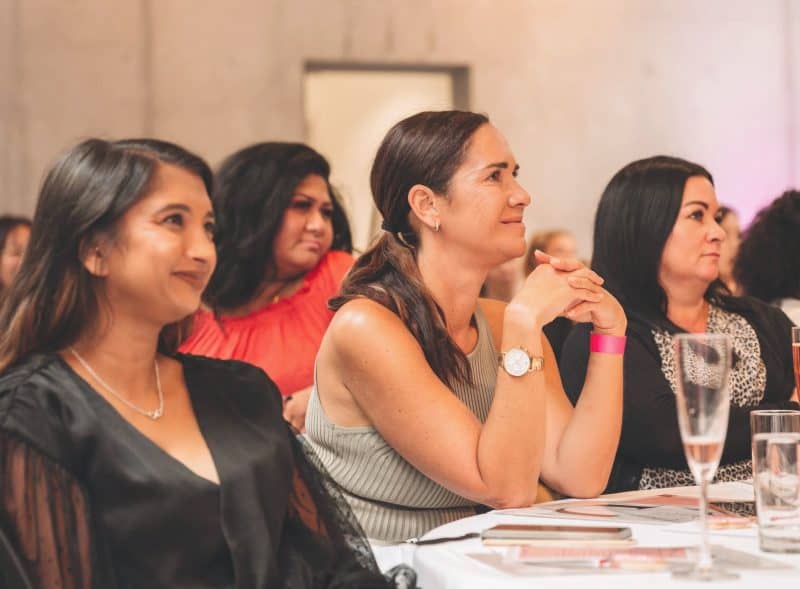
The conference stage version of a startup story starts with the idea and jumps to the traction. The first year — the part in between — gets compressed into a sentence. In reality, that year is mostly confusion, admin, and the slow accumulation of small decisions that do not feel significant until later. You are writing code at midnight because you spent the day doing GST returns. You are cold-emailing potential customers and getting no replies. You are Googling how to register a company and which accounting software does not cost a fortune.
For women founders, the first year often includes an additional layer: proving legitimacy. Male founders get the benefit of the doubt — “he is building something” is taken at face value. Women founders field questions that male founders do not: who is your technical co-founder? (She is the technical co-founder.) Is this a side project or a real business? How will you manage this with family commitments?
The founders who make it through year one are not the ones with the best ideas. They are the ones who kept going when everything about the experience suggested they should stop. That persistence is not glamorous and it does not make for good keynote material, but it is the actual job.
Pitching When the Room Has Already Decided
Research published in the Harvard Business Review found that investors ask male founders promotion-focused questions (“How do you plan to grow?”) and female founders prevention-focused questions (“How will you avoid losing money?”). Same stage, same metrics, different questions. The promotion framing invites ambition. The prevention framing invites caution. Founders who answer promotion questions raise more money. The game is rigged before the pitch starts.
In NZ, the pitch circuit is smaller and more personal than in larger markets, which cuts both ways. You will pitch to the same people multiple times, and relationships matter more than a polished deck. But those relationships are harder to build when the investor’s social circle does not naturally overlap with yours.
Practical countermeasures exist. Reframe prevention questions as promotion answers — when asked how you will avoid customer churn, answer with your growth strategy instead. Bring data, not just narrative. Have a customer on speed dial who can vouch for the product. And if possible, pitch to investors who have already funded women. Not because men cannot evaluate your business fairly, but because someone who has already written that cheque has already worked through whatever bias they carried.
Finding Customers in a Small Market
New Zealand has five million people and an economy that runs on agriculture, tourism, and a growing tech sector. If your product serves a niche within that market, your total addressable customer base might fit in a decent-sized stadium. This is either a constraint or a focus tool, depending on how you look at it.
The upside of a small market is reachability. You can talk to a significant percentage of your potential customers directly. You can test messaging, iterate on product features, and build relationships at a pace that is impossible in larger markets. NZ founders who have gone on to succeed internationally often credit the local market as a testing ground where they refined the product before scaling.
The downside is obvious: if you are building something that needs volume to work, NZ alone will not sustain it. Most NZ tech startups that reach meaningful scale do so by going global from day one — building for an international market and using NZ as the development base. New Zealand Trade and Enterprise actively supports this model, and the time zone — awkward for Europe, workable for Australia and the US west coast — has its own strategic advantages. The small market is not a dead end. It is a starting point.
The Support Ecosystem
Accelerators and Programmes Worth Your Time
NZ has a growing number of accelerator and incubator programmes, and some are genuinely useful for women founders. Creative HQ in Wellington runs programmes including the Lightning Lab accelerator series, which has supported women-led startups across sectors. Chiasma focuses on deep tech and biotech commercialisation and has had women-led teams in its cohorts.
The Ministry of Awesome in Christchurch supports early-stage startups with events, coworking, and connections to the local investor community. GridAKL in Auckland provides a similar function for the Tamaki Makaurau startup scene. These organisations matter not just for their programmes but for the networks they provide — the introductions, the informal advice, the sense that other people are doing the same difficult thing.
Be selective. Not every accelerator is worth the equity they take or the time they demand. Ask graduates what they actually got from the programme. If the answer is mostly “a nice coworking space and some networking,” you can get that without giving away three to eight percent of your company. The good programmes offer structured mentorship, investor access, and commercial partnerships that would take years to build on your own.
Networks That Actually Open Doors
SheEO (now known as Coralus) operates a model where women contribute to a pooled fund that loans money to women-led ventures, and has an active NZ chapter. The model is interesting — it combines funding with a built-in community of women who have skin in the game and a reason to support your success.
NZTech and its sub-groups, including NZTech Women, provide industry connections and advocacy at a policy level. The Entrepreneurs Organisation has NZ chapters in Auckland and Wellington and, while not women-specific, has an increasing number of women members who bring a different perspective to the peer advisory groups.
The most valuable networks are often the informal ones. A WhatsApp group of women founders who share leads, vent frustrations, and make introductions for each other can be worth more than any formal programme. These groups tend to form around events and accelerators — another reason to show up even if the programme itself is not life-changing. The connections you make in the corridor matter as much as what happens in the room.
What Needs to Change
Investors Need to Fix Their Pattern Matching
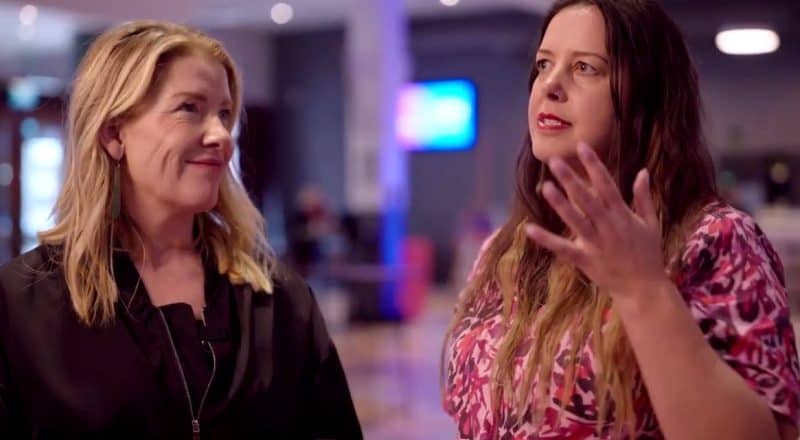
The most impactful change is the simplest to describe and the hardest to achieve: investors need to fund more women. Not as a charity exercise or a PR initiative but because the data consistently shows that women-founded companies deliver equal or better returns on investment. A Boston Consulting Group study found that startups founded by women generated seventy-eight cents of revenue per dollar invested, compared to thirty-one cents for male-founded startups. The business case is settled. What remains is bias, and bias does not respond to business cases — it responds to changed behaviour.
More women in investment roles would help. When the people writing cheques share the experience of the people pitching, pattern matching works differently. NZ has seen some movement here — more women joining angel networks, a few women-led funds emerging — but the pace is glacial relative to the need.
Investor networks could also do something straightforward: audit their own portfolios. What percentage of funded companies have women founders? What is the average cheque size compared to male-founded companies at the same stage? If the numbers are bad — and they probably are — that is information, and information is the first step toward different decisions.
Visibility Creates Possibility
When you cannot see people who look like you doing the thing you want to do, the thing feels less possible. This is not abstract. It is how human motivation works. The shortage of visible women founders in NZ — on conference stages, in media coverage, in the stories that get told about the startup ecosystem — has a direct effect on how many women consider starting something.
The fix is not to manufacture heroic narratives. It is to tell the real stories — the funding rejections, the product pivots, the times the company nearly died, the mundane persistence that kept it alive. Women considering starting a business do not need to hear that it is easy. They need to hear that it is hard and that other women have done it anyway.
Media outlets like RNZ and The Spinoff have improved their coverage of women in business, but the default story is still the exception rather than the norm. Startup ecosystem organisations have a role here too — who gets invited to speak, who gets profiled, who gets held up as an example of what success looks like. If those examples are overwhelmingly male, the signal is clear regardless of what the diversity statement on the website says.
Every woman who builds something and talks about it honestly makes it slightly easier for the next one to start.
The women building startups across NZ are not waiting for the ecosystem to fix itself. They are building anyway — raising capital where they can find it, bootstrapping where they cannot, and creating the companies they wanted to work for. The landscape is shifting, slowly, because they are shifting it. That is not a happy ending. It is a progress report, and the work is far from done.