
Running a tech event is the easy part. Running one that people actually want to come back to — that takes a different set of skills entirely. This is a practical guide for anyone organising women-in-tech community events in Aotearoa, built from years of figuring out what works and what quietly drives people away.
Venue Is Everything (and Not for the Reasons You Think)
Stop Defaulting to the Startup Basement
The single most common mistake in running a tech community event is booking whatever co-working space offers you a freebie. It makes financial sense. It makes zero community sense. That third-floor walkup in Ponsonby with no lift and street parking only? You have just told every attendee with a mobility issue, every parent who needs to park close, and every person catching the bus from South Auckland that this event was not designed with them in mind.
Good venues start with a simple question: can someone who does not drive get here after 5pm without a twenty-minute walk from the nearest bus stop? In Wellington, that rules out half of Miramar. In Auckland, it means you are probably looking at the CBD or inner suburbs with train access. Check the AT Metro or Metlink timetables for the time your event actually starts, not the midday schedule.
Then think about the room itself. Long narrow rooms with a single projector create lecture energy. You want a space where people can actually see each other — round tables, lounge setups, anything that breaks the audience-performer divide. The venue sets the tone before you say a single word.
Accessibility Is Not a Checkbox
Accessibility goes well beyond a ramp at the front door, though you would be surprised how many event spaces still cannot manage that. Ask about hearing loop systems. Ask whether the lighting is adjustable or if you are stuck with fluorescent overheads that give half the room a migraine by 7pm. Ask about a quiet space — not everyone can sustain two hours of networking energy, and having somewhere to decompress is the difference between someone staying and someone leaving early and never coming back.
Dietary requirements are the other piece people treat as an afterthought. Collect them at registration, not at the door. Gluten-free, dairy-free, halal, vegan — these are not exotic requests in 2025, and running out of options for people who flagged their needs in advance is a trust-breaker. Budget an extra 15% on catering to cover the people who forgot to RSVP their requirements. Label everything clearly.
If your venue does not have gender-neutral bathrooms, find out whether you can temporarily designate one. It costs nothing and it signals that you have actually thought about who is in the room.
The Budget Reality Check
In Auckland and Wellington, expect to pay between \$300 and \$1,500 for an evening venue hire, depending on whether you need catering facilities or just a room with chairs. University function rooms are often cheaper midweek and come with AV gear included — AUT, Victoria University of Wellington, and University of Canterbury all have community booking options worth investigating.
The sponsor-venue trade-off is real. A company offering a free venue will often want branding, a speaking slot, or both. This is fine as long as you are transparent about it with your community and the sponsor is not using your event as a recruitment funnel disguised as a community gathering. Set the terms in writing before you accept. One short acknowledgement at the start, logo on the event page, done. If they want a 15-minute pitch about their engineering culture, that is a sponsorship tier, not a venue swap.
Track your costs from event one. A simple spreadsheet covering venue, catering, speaker travel, and incidentals will save you from the slow budget creep that kills community events in their second year.
Finding Speakers Who Are Not the Usual Suspects
The Conference Circuit Problem
NZ tech has a speaker circuit. You know the names. They are generally excellent — that is how they ended up on the circuit — but if your community event features the same lineup as Webstock and NZ Tech Rally, you are not adding anything new to the conversation. You are just running a smaller version of something that already exists.
The deeper problem is structural. The conference circuit favours people with employer support, existing profiles, and the confidence that comes from having spoken before. That filters out the exact voices a women-in-tech community event should be amplifying: the senior developer who has never given a talk but has a decade of hard-won insight, the team lead navigating her first management role, the career-changer who landed her first dev job at 38.
Your job as an organiser is not to find speakers. It is to find people with something worth saying and then make the speaking part as low-friction as possible. That means offering to help with slides, doing a practice run, and being clear that a 10-minute talk with no slides is every bit as valuable as a polished 30-minute keynote.
Where to Actually Look
Start with the communities that already exist. The NZ Tech Women Slack is a goldmine of people doing interesting work who have never been asked to talk about it. She Sharp, GirlBoss NZ, and university groups like the AUT Women in Tech society are direct pipelines to emerging voices. Ask community members directly: “Who in your team is doing something cool right now?” Personal referrals surface speakers that a call-for-papers never would.
LinkedIn works better than you would expect if you search for specific roles rather than generic terms. Look for NZ-based women in DevOps, data engineering, product management, UX research — the roles that sit outside the stereotypical developer-on-stage model. A talk from a site reliability engineer about what actually goes wrong in production at 2am is more compelling than most keynotes.
Do not overlook adjacent industries. Women in biotech, fintech regulation, and health informatics bring perspectives that pure-tech audiences find genuinely refreshing. The best community events are not echo chambers. They are the place you hear something you would never encounter in your own standup.
Paying Speakers (Yes, Really)
Community events run on thin margins. That does not excuse asking someone to prepare a talk, travel across town, and give up their evening for nothing but exposure. Exposure does not pay for petrol.
At minimum, cover travel costs and provide a proper meal — not a sad sandwich from the catering table, but a seat at the dinner alongside everyone else. If your budget stretches further, a koha of \$100 to \$200 per speaker is standard for NZ community events and signals that you value their time. Frame it as a koha rather than a fee; it fits the community context better and removes the awkward negotiation energy.
If you genuinely cannot pay, be upfront about it from the first conversation. “We are a volunteer-run community event with no speaker budget” is honest and most people will respect it. What burns goodwill is the bait-and-switch: talking up the opportunity and then revealing there is no compensation after someone has already committed. Build a speaker budget line into your sponsorship asks from day one. Most sponsors would rather fund speakers directly than pay for extra logo placement nobody looks at.
Format Design: Why Dinner Beats Lecture Every Time
The Psychology of Eating Together
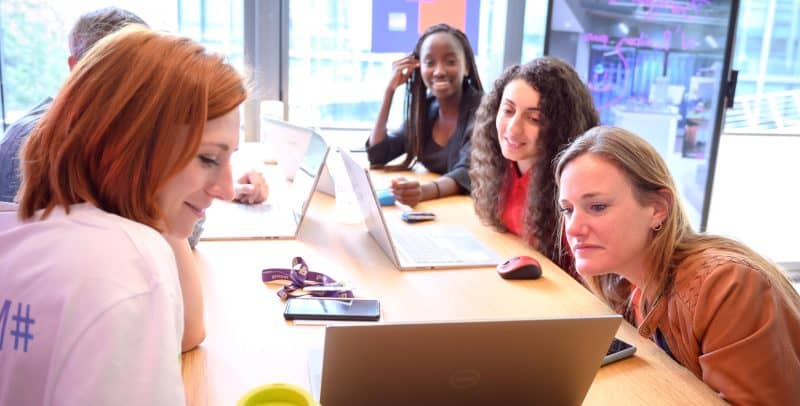
There is a reason every culture on earth builds relationships around food. Sitting across a table from someone with a plate in front of you changes the social dynamic entirely. You are not an audience member. You are a dinner guest. That shift — from passive observer to active participant — is the entire foundation of the Girl Geek Dinners format.
The dinner model works because it removes the performance anxiety that kills participation at lecture-style events. Nobody has to raise their hand in front of a hundred people. Conversations happen naturally, in groups of four to eight, at a volume where you can actually hear each other. The speaker component is shorter — 15 to 20 minutes rather than a full hour — and it lands in the middle of the evening rather than dominating it.
You do not need a sit-down three-course meal to make this work. Shared platters, buffet-style setups, or even decent pizza and salad achieve the same effect. The point is that food is central, not an afterthought wedged in before the “real” programme starts. When people eat together, they talk. When they talk, they come back.
Structured Networking That Does Not Make People Cringe
The word “networking” makes about 60% of your potential attendees want to stay home. It conjures images of people thrusting business cards at each other while making aggressive eye contact. Your job is to create the conditions for connection without the awful mechanics of traditional networking.
Table topics are the simplest tool. Print a card for each table with three or four conversation prompts that are specific enough to be useful but open enough to go anywhere. “What is the most overengineered solution you have seen in production?” beats “Tell us about yourself” every single time. People bond over shared professional absurdity faster than they bond over elevator pitches.
Lightning intros work well at smaller events. Each person gets 30 seconds to say their name, what they do, and one thing they are curious about right now. No pitches, no job titles longer than three words. It gives everyone a hook for later conversation: “You mentioned you were curious about Rust — are you actually making the switch?”
The unstructured time matters too. Build in at least 20 minutes of open mingling at the start, before any programme begins. People who arrive early and stand around with nothing to do leave early. People who arrive and immediately find someone to talk to stay all night.
The Admin Nobody Talks About
Registration, RSVPs, and the No-Show Problem
Community events in NZ run a no-show rate between 25% and 40%. That is not a reflection of your event. It is the reality of free events competing with weather, traffic, childcare, and the gravitational pull of the couch after a long day. Plan for it.
If your venue holds 50 and you want 40 people in the room, open registration for 60 to 65. Run a waitlist once you hit capacity and send a reminder email 48 hours before the event with a clear “can you still make it?” prompt. People who cannot come will generally free up their spot if you make it easy — a single reply or a one-click cancel link.
Eventbrite and Luma both work fine for NZ community events. Eventbrite has better reporting; Luma has a cleaner interface and better email tools. If you are charging even a nominal \$5 to \$10 ticket price, your no-show rate will drop to under 15%. That small friction point is the single most effective tool against empty seats. Donate the ticket revenue to a relevant cause like CanCode NZ if you do not need it for costs — it gives the ticket price a purpose beyond attendance management.
Funding Without Selling Your Soul
A typical women-in-tech community event in NZ costs between \$800 and \$3,000 per evening once you factor in venue, catering, speaker costs, and incidentals. You have three realistic funding paths: corporate sponsorship, grants, or ticket revenue. Most events use a combination.
Tiered sponsorship keeps things simple. A naming sponsor at \$1,000 to \$2,000 gets logo placement, a mention at the event, and a social media shout-out. Supporting sponsors at \$300 to \$500 get a logo on the event page. Keep it to two tiers maximum. Nobody wants to manage a five-tier sponsorship deck for a community dinner.
In-kind support is often easier to secure than cash. A company providing the venue, a catering company donating food, a design agency producing your event collateral — these contributions reduce your cash outlay without the overhead of managing sponsor invoices. Get it in writing, even if it is just an email confirmation.
For ongoing event series, look at the NZ Digital Skills Forum and InternetNZ community funding rounds. These grants specifically support digital inclusion and community tech events. The application process is straightforward and the amounts — typically \$2,000 to \$5,000 — can underwrite an entire season of events.
The Volunteer Burnout Trap
The dirty secret of community events is that they are almost always run by two or three people doing everything. And those people burn out. Reliably, predictably, usually about 12 to 18 months in. If you want your event to survive past its first year, you need to build a team structure that does not depend on any single person.
Start with a minimum viable committee of four: one person owns the venue and logistics, one owns speaker liaison, one owns communications and registration, and one floats as backup. Rotate roles every six months. Nobody should own the same job for more than two event cycles in a row.
Document everything. A shared drive with your venue contacts, sponsor agreements, catering preferences, and event-day run sheet means anyone can pick up a role without starting from scratch. It is boring. It is essential.
Most importantly, build in breaks. Running monthly events is a pace that kills volunteer teams. Bi-monthly or quarterly is sustainable long-term and creates anticipation rather than obligation. If your team is exhausted, skip an event. Your community will still be there when you come back. The events that last a decade are the ones that paced themselves from the start.
After the Event: Turning One Night into a Community
Follow-Up That Actually Means Something
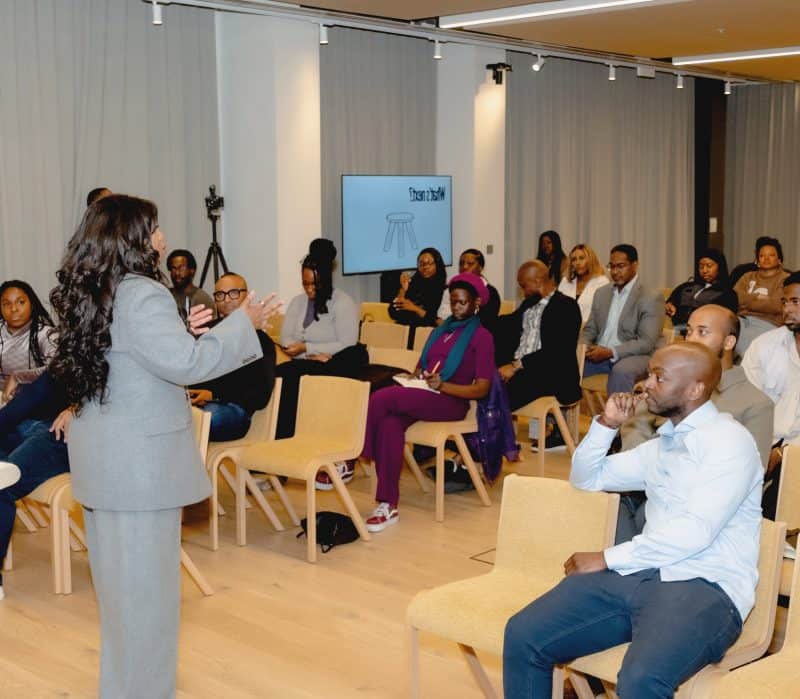
The 48 hours after an event are when community either solidifies or evaporates. Send a follow-up email within 24 hours while the energy is still fresh. Include the speaker slides or a summary of key points, a link to your community channel (Slack, Discord, whatever you use), and an honest ask for feedback.
Feedback surveys should take under two minutes. Three questions are plenty: what worked, what did you not enjoy, and would you come to the next one. Long surveys get abandoned. Short ones get completed. Use the responses to make visible changes — if five people mention the room was too cold, fix it next time and tell people you fixed it. That feedback loop is how trust gets built.
Share something useful between events. A fortnightly digest of job postings, articles, or opportunities relevant to women in NZ tech keeps your community engaged without requiring another full event. Keep it short, keep it curated, and resist the urge to turn it into a newsletter. Nobody needs another newsletter. They need a mate who sends them the good stuff.
Measuring Success Beyond Headcount
If your only success metric is how many people showed up, you are measuring the wrong thing. A room of 80 strangers who never come back is worth less than 25 regulars who bring a friend each quarter.
Track your return rate — the percentage of attendees who come to more than one event. A healthy community event should see 40% to 50% of attendees returning within three events. Below 30% and something about the experience is not sticking. Above 60% and you might not be reaching enough new people.
Watch for organic growth signals: people tagging your event on social media without being asked, attendees introducing themselves to each other by first name because they remember the last event, someone volunteering to help without being recruited. These are the indicators that you have built something real.
The hardest metric to track is also the most important: did someone make a professional connection at your event that changed something for them? A mentorship that started over dinner. A job referral that came from a table conversation. A collaboration that would not have happened otherwise. You will hear these stories if you ask, and they are the reason the admin and the budget stress and the late nights are worth it.
The events that endure are never the slickest or the best-funded. They are the ones where someone walks in not knowing anyone and walks out with three new contacts and a reason to return. Get the basics right, look after your people, and the community will build itself around you.