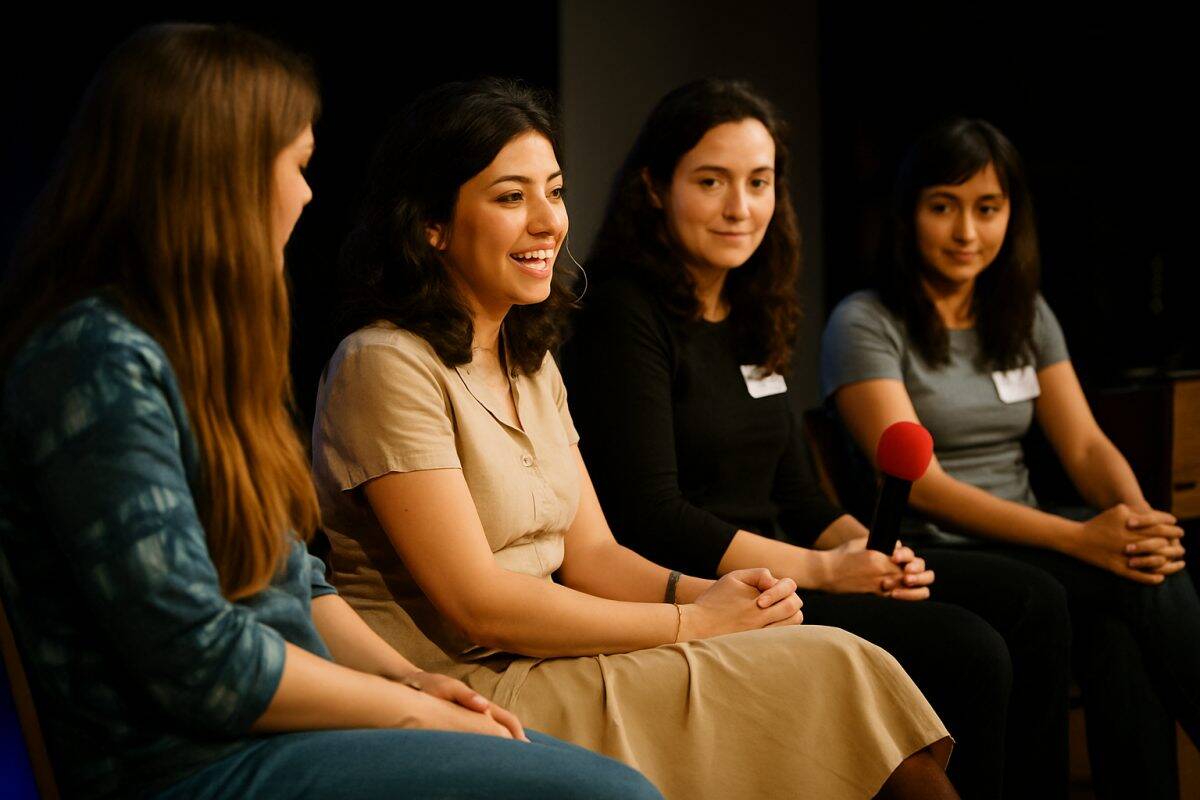
Most tech events follow the same script: a room full of men, a woman on a panel for balance, standing-room networking where you shout over someone’s pitch about blockchain. Girl Geek Dinners threw out that script a long time ago. The August event in Wellington was forty people, a seated dinner, and one speaker who talked about Kubernetes migrations like she was telling a war story — because she was.
Before Anyone Picks Up a Microphone
The Room and the Ratio
The August dinner was held in a ground-floor space off Courtenay Place — the kind of room that fits maybe forty people if you push the tables together, which is exactly what the organisers did. No stage. No lectern. A projector screen leaned against one wall and someone had run an extension cord across the floor with just enough gaffer tape to pass as intentional. The room was full of women. Not evenly split, not mostly women — women, with a handful of men scattered through the seats like guests at someone else’s family dinner, which is precisely what they were.
That ratio is not an accident. Girl Geek Dinners operates on a simple structural rule: men attend as invited guests of women members. The result is a room where women are not a minority being accommodated but the default. The difference is physical — you can feel it in the volume of the conversation, the way people take up space, the absence of that particular brand of confidence that fills a room when men outnumber women three to one.
What the Name Tag Does Not Tell You
First-timers always notice the same thing: people skip the job title. At a standard tech meetup, introductions follow a formula — name, company, role, maybe a self-deprecating joke about JavaScript frameworks. At GGD events, you are more likely to hear what someone is building, what problem they are stuck on, or what they just shipped that week. A backend engineer mentions she has been wrestling with a caching issue in Redis. The woman next to her leans in because she solved something similar last month.
The energy is different when you remove the performance. Nobody is trying to sound impressive to a room of strangers. Nobody is scanning name tags to figure out who is worth talking to. The conversations start faster and go deeper because the usual social calculus — who has status, who is worth impressing, who might be hiring — gets quietly set aside. People are just talking to each other. It sounds unremarkable until you realise how rare it is at tech events.
Food as Infrastructure
The food is not an afterthought. GGD events are structured as seated dinners, not stand-around-with-a-plate affairs. You sit down next to someone you do not know and you stay there for the better part of an hour. This is deliberate. Standing events produce clusters — people gravitate toward friends, toward the bar, toward the wall. Seated dinners produce conversations with whoever draws the chair next to yours.
Sponsors cover the catering, which keeps the ticket price low or nonexistent. That matters. A free dinner in a Wellington venue on a Tuesday night is a fundamentally different proposition from a forty-dollar networking event. The barrier to showing up is almost zero, which means the room includes people who would never attend a paid tech event — career changers still in their Dev Academy cohort, graduates two weeks into their first role, women returning to the industry after a break. The food is infrastructure: it keeps the cost down and the conversations long.
Speakers Who Actually Build Things
No Panels, No Pitches
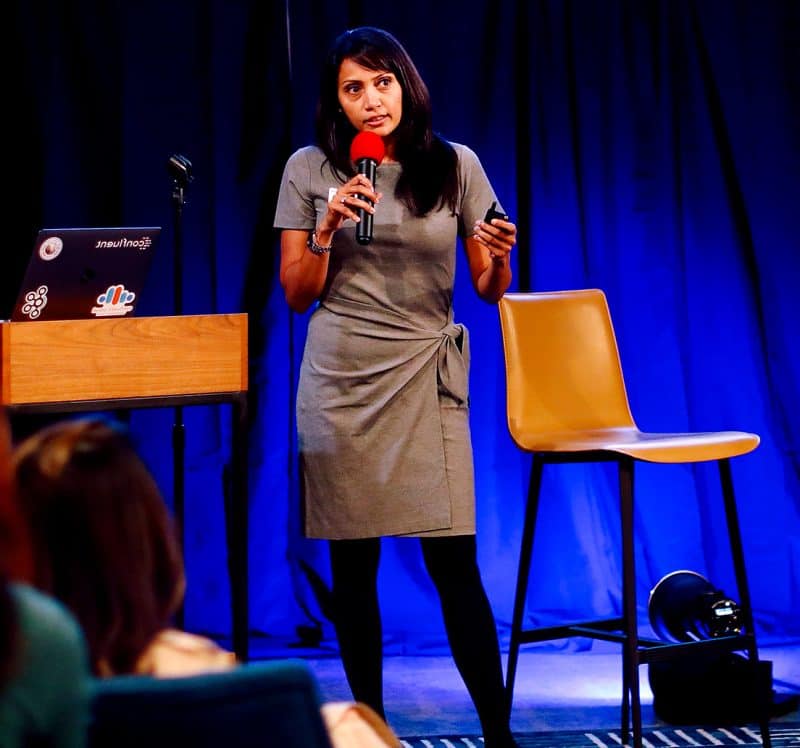
The August speaker was a platform engineer who had spent six months migrating a legacy system to Kubernetes and wanted to talk about the three times it nearly went sideways. That is a typical GGD talk — somebody who builds things explaining, with specifics, how the building went. No motivational framing. No polished narrative arc where the struggle leads to triumph. Just an honest account of technical decisions, trade-offs, and the one Friday afternoon deployment that aged her by a year.
GGD talks run fifteen to twenty minutes, which is long enough to get into substance and short enough that nobody reaches for their phone. There are no panels, because panels are where nuance goes to die — five people giving two-minute answers to questions written by a moderator who has never built anything. There are no product pitches disguised as technical talks. The speakers are chosen because they have done interesting work and can talk about it clearly, not because their company bought a sponsorship package.
Questions That Go Somewhere
The Q&A after the August talk went for longer than the talk itself, which is usually a good sign. Someone asked about the rollback strategy for the failed deployment — a genuine technical question from someone who was clearly facing something similar. The speaker pulled up a diagram she had not planned to show. Two more hands went up before she finished answering.
This is not what Q&A sounds like at most tech meetups, where someone inevitably asks a question that is actually a five-minute statement about their own experience, or where the first question is so broad the speaker has to politely decline to answer it. At GGD events, the questions are specific and curious. People ask because they want to know, not because they want the room to hear them ask. The shift happens when the speaker is honest about something that went wrong — the audience leans forward instead of leaning back, because they have been there and they know the feeling.
The Conversations That Actually Matter
Side Conversations Over Dessert
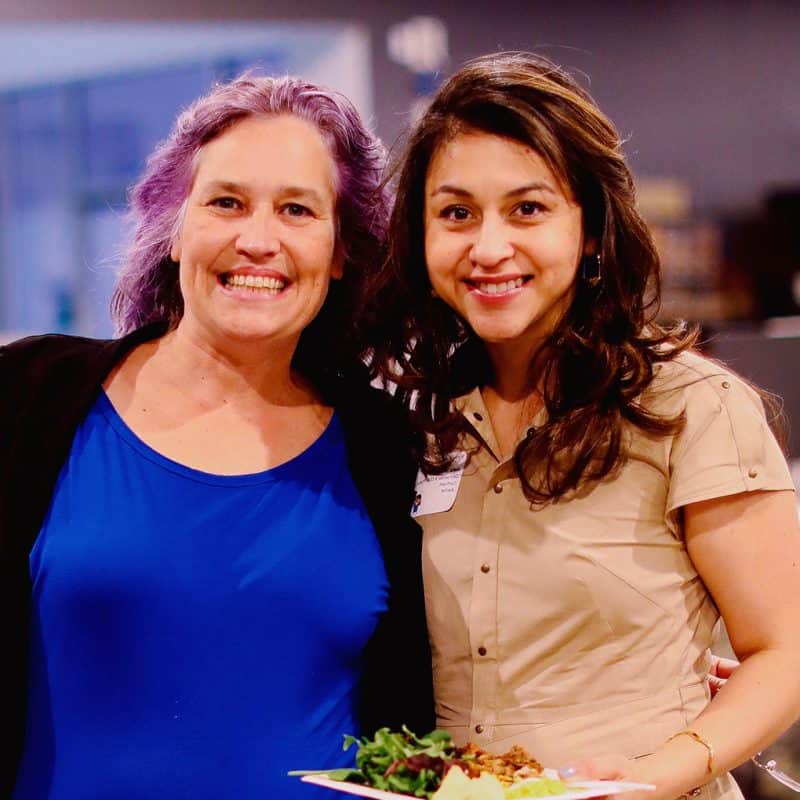
After the speaker wrapped up, the real event started. People stayed in their seats but the conversations opened outward — across the table, between tables, in the queue for another glass of wine. A junior developer three months into her first role was asking a senior engineer how she handled a particularly aggressive code reviewer. Two product managers from different companies discovered they were solving the same onboarding problem and swapped approaches like trading cards.
Someone mentioned a role at her company that had not been posted yet. Someone else offered to review a portfolio. A data scientist described a conference she had just attended and three people wrote down the name. These exchanges do not look like networking because they are not — nobody is collecting contacts for a LinkedIn connection request. They are conversations between people who have enough in common to be useful to each other and enough trust in the room to be honest about what they actually need.
The Thing Nobody Says at Regular Meetups
There is a particular conversation that happens at GGD events and almost nowhere else. It starts when someone says something like, “I thought it was just me.” She might be talking about being interrupted in meetings so often she started keeping a tally. Or about discovering that the graduate hired at the same time, with the same degree, was earning eight thousand dollars more according to pay gap data that keeps making the same point. Or about the performance review that praised her communication skills and said nothing about her code.
These are not therapy sessions. Nobody is breaking down. The tone is more like recognition — the specific relief of discovering that a problem you have been carrying alone is structural, not personal. Imposter syndrome gets discussed a lot in tech spaces, but at GGD events the framing shifts: maybe you do not have imposter syndrome. Maybe you have a rational response to being consistently treated as though you do not belong. That reframe, spoken aloud over wine by someone who has been in the industry for fifteen years, lands differently from reading it in an article.
Why This Is Not Just Another Meetup
The Guest Rule Changes Everything
The guest policy is the single design decision that makes everything else possible. Men do not buy tickets to Girl Geek Dinners — they are invited by women who are already members. It sounds like a small distinction. It is not. An open-door policy would produce a room that trends toward the industry default: sixty-forty male, then seventy-thirty, then the women stop coming because the thing that made it different has evaporated. A women-only policy would work but would exclude the male allies who genuinely want to support the community and whose presence, in the right proportion, actually strengthens the room.
The guest model threads the needle. Women control the door. They decide who comes, which means they decide the culture of the room. A man at a GGD event is there because a woman in tech thought he would add something. That inverts the usual dynamic at tech events, where women are the ones whose presence is conditional — invited to fill a diversity quota, included on a panel to avoid an all-male lineup. At GGD, the men are the ones with conditional access, and the women are the ones who set the terms.
Small on Purpose
GGD events cap at around forty people. There is always a waitlist, which means some people miss out. The organisers could book a bigger venue, open more tickets, and fill a room of two hundred without trying. They do not, and the reason is structural rather than logistical.
At forty people, everyone can talk to the speaker afterwards. The speaker can answer questions without a microphone. You can hear the person across the table. The dinner format requires intimacy — you cannot have a meaningful conversation with a stranger if there are a hundred and sixty other strangers creating a wall of noise around you. Scale would turn GGD from a dinner into a conference, and conferences already exist. What does not exist, in most cities, is a room of forty women in tech having dinner together once a month. The waitlist is a feature. It creates anticipation, ensures the people who attend actually want to be there, and protects the thing that makes the format work.
What People Take Home
Nobody takes home a goodie bag or a conference lanyard. What stays with people after a GGD evening is less tangible and more lasting. It is the phone number of someone who offered to look over your CV before you apply for that senior role. It is the name of a recruiter who is not terrible, passed on by someone who has used her twice. It is the memory of forty women laughing at the same joke about Jira tickets and knowing, for the first time in months, that the frustration is shared.
The practical takeaways matter — the job lead, the code review offer, the conference recommendation. But the thing people describe when they talk about their first GGD event is simpler than that. It is the experience of being in a room full of women who work in tech and realising that the isolation you felt at your own company was not a reflection of the industry at large. It was a reflection of one room. This is a different room.
The format is simple enough to describe in a sentence: women in tech have dinner, someone gives a talk, and the conversations run until the venue kicks everyone out. What makes it work is everything the format is not — not a conference, not a networking event, not a panel discussion, not a diversity initiative with a corporate sponsor’s logo on the lanyard. It is a room where women set the terms, and the terms turn out to produce exactly the kind of tech community everyone claims to want.